Media: Lianhe Zaobao
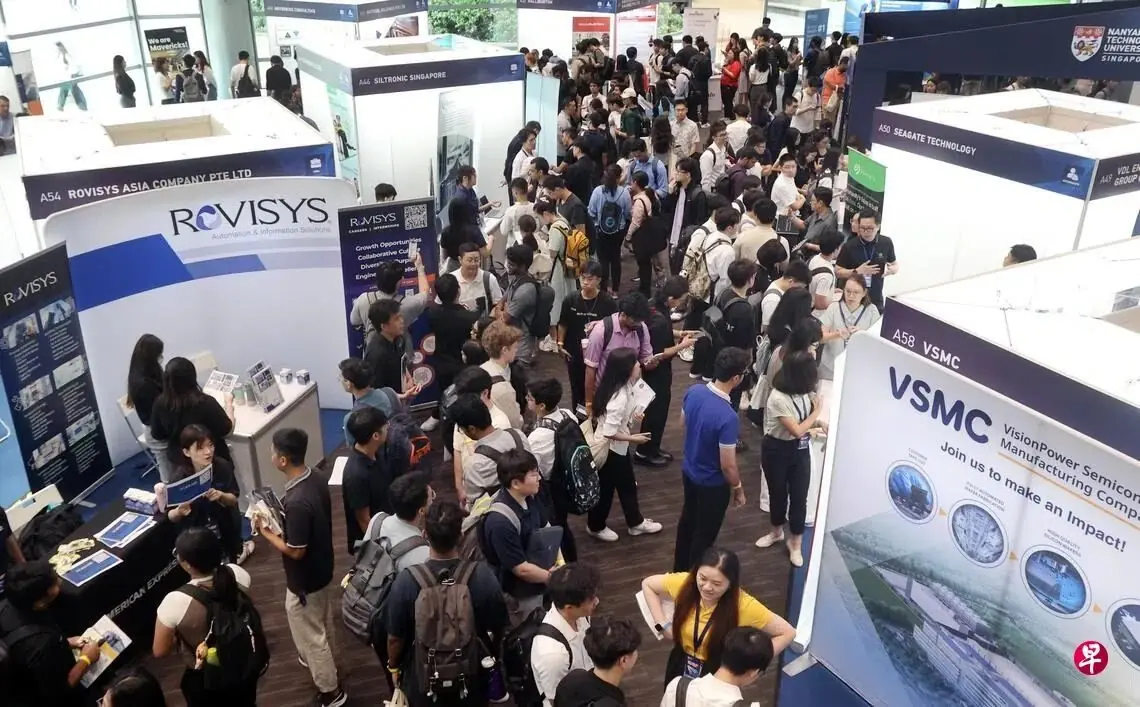
A friend of mine, a former history lecturer at a local university, shared a news report: “Long job hunts, few replies: Survey shows Singapore graduates struggling in the job market.” He was puzzled — Singapore’s economy is strong compared to other Asian countries, so why do local graduates (especially Singaporeans) not only fail to secure jobs but also lack confidence about finding work in the next six months?
Then, in the Asia AI Association discussion group, another report came in: “Singapore ranks third in the Global AI Index, behind only the US and China. The study, published by Tortoise Media, assessed AI capabilities in over 60 countries across more than 111 indicators, covering R&D, talent, infrastructure, operating environment, government strategy, and business ecosystem.”
My instinctive explanation to the historian was that the AI impact on Singaporean graduates is more severe than anywhere else, for several reasons:
- Singapore’s economy is strong, open, and highly internationalized. Large multinationals adopt AI faster, outsourcing low-skilled jobs elsewhere, which raises the bar for local entry-level talent and accelerates the impact.
- Many local SMEs have been struggling for years, surviving only through government subsidies. Conservative ones avoid expansion, while the ambitious ones apply for AI upskilling grants to support existing employees, leaving little demand for inexperienced and higher-cost fresh graduates.
- Unlike China or the US, Singapore lacks vast land and a large domestic market to build resilient local business ecosystems. The nation must pursue advanced technology, which demands lifelong learning to avoid obsolescence.
Simply put: Singapore leads in AI, but as a small economy, entry-level jobseekers suffer the most.
The very next day, Prime Minister Lawrence Wong said Singapore must prioritize jobs in the face of global fragmentation and the rise of AI. He mentioned equipping and empowering SMEs, talent upskilling, strengthening employment subsidies, launching a new job-matching scheme to connect jobseekers with nearby opportunities, and introducing internship programs for graduates from ITE, polytechnics, and universities who have yet to find work — all aimed at enabling citizens to use AI effectively.
It is encouraging that the government continues to take the lead. Yet for citizens — especially fresh graduates — while upskilling addresses the symptoms, it does not resolve the root causes of job challenges.
I once ran an executive search firm in Singapore, and now I am co-founder of the AI RecruiTech startup JobsTaylor. Over the years I have helped companies across Asia hire talent while also driving digital transformation, witnessing firsthand AI’s impact on jobseekers, especially graduates. Many local students acquire AI skills, but when given tasks, they struggle to apply what they’ve learned to complete them.
It’s like learning martial arts — practicing forms and reciting formulas, but lacking inner strength to connect them, leaving no real combat experience.
The missing link between AI knowledge and practical use is MINDSET.
This mineset has three parts:
1) Motivation Many local students list AI tools on their resumes, but in practice they seldom use them. They rarely speak about improving their studies or daily life with AI. Growing up in a relatively affluent society, Singaporeans often lack urgency/ hunger in job hunting — some even take graduation trips before applying for jobs. In contrast, foreign graduates in Singapore are usually contractually bound to work here for years. Even though Employment Passes are harder to obtain, they are often more driven, leveraging AI tools to polish portfolios, resumes, and job applications to stay competitive.
2) Problem-Solving Ability The local workplace relies heavily on SOPs — every step clearly written out. Many employees need instructions or grading rubrics to act. But the world today changes too fast; many problems have no SOP. This mindset shift must begin in education.
For example, our chamber needed to produce an online bulletin. We recruited over 15 local student volunteers, all familiar with AI tools and coursework. When tasked to research publishing platforms, publishing vendors, and design timelines, they dragged on for over two months, constantly asking about each step, or remaining stuck after understanding the task. With more probing, it turned out they did not know how to use AI tools to help with searches or scheduling. The results were unsatisfactory, and some simply disappeared.
By contrast, we assigned the same task to a young overseas recruit — she single-handedly completed the bulletin in just four days.
3) Execution This reflects daily realities for many companies. Outsourcable tasks are often sent abroad by multinationals for efficiency. Local operations in Singapore are kept mainly due to tax and trade advantages, with employees eligible for subsidies and foreign manpower quotas. As mid-level staff learn to use AI to replace entry-level output, the incentive to hire fresh graduates decreases. Graduates who want jobs must prove they can adopt and execute with new technologies.
Fortunately, younger students in primary and secondary schools already show stronger motivation, problem-solving, and execution — they are AI-native. But today’s tertiary and recent graduates risk becoming the “squeezed middle” in the technological tide. Urgently, they must shift their mindset, proactively learn, apply creativity in problem-solving, and strengthen execution to stay competitive.
Talk to us to solve your digital challenges.
#AI #ArtificialIntelligent #GenAI #worklifebalance #futureofwork #GenerativeAI #University #Graduates #JobsTaylor #Singapore #AsiaAIAssociation #Grants #Government