Media: 联合早报 聯合早報 Lianhe Zaobao
Recently, the AI-generated short film “Huo Qubing” went viral across the Chinese internet. Centered on the famed Western Han dynasty general, the project was produced by a Chinese AI content company using generative AI to create visuals, characters, and parts of the narrative. Reportedly, its production cost was extremely low—far below even the early development costs of traditional film and television—sparking widespread attention from both industry insiders and audiences.
However, as discussions intensified, misconceptions also spread. Claims such as “zero cost at 3,000 RMB” or “almost no human involvement” were exaggerated. In reality, the production still required human input in areas like prompt engineering, post-production, and content planning. Even so, its cost and efficiency advantages are undeniable. From the emergence of “Huo Qubing” to the viral success of “Saving the Fox on Snowy Mountain,” AI-generated video is clearly moving from experimental creation toward a form of content that can capture mainstream market attention. It is no longer just a technical showcase—it raises a fundamental question: when the cost of visual production is drastically compressed, how will the value of traditional actors be redefined?
This issue has already surfaced in Western film and television industries. During the 2023 SAG-AFTRA strike in the United States, AI became one of the central points of contention. Actors feared that image scanning and voice replication technologies would allow studios to “buy once, use forever,” thereby weakening their bargaining power. At the same time, the Writers Guild of America (WGA) pushed for restrictions on AI-generated writing, signaling that the entire content industry is undergoing structural transformation. While the final agreements secured certain protections—such as requiring consent and compensation for AI usage—many in the industry believe this is only the beginning.
Several major stars have also spoken out. Tom Hanks warned that AI could easily replicate his appearance and voice, even allowing him to “star in new films” after his death. Scarlett Johansson has similarly raised concerns about voice imitation. These examples highlight that even top-tier actors struggle to fully control their digital likeness—let alone those in the mid- to lower tiers of the industry.
In contrast, the European film sector has taken a more cautious stance, particularly regarding cultural protection and labor rights. Film institutions in countries like France and Germany have begun discussing restrictions on AI-generated content in major film festivals, emphasizing the centrality of “human creation.” Nevertheless, AI is widely seen as an irreversible tool—one that must be regulated and coexisted with, rather than excluded entirely.
Back in Asia, the situation is even more challenging. In many regions, the lack of strong unions means actors already have limited bargaining power within the industry. In China, the rise of short-form videos and micro-dramas has significantly compressed the space for traditional film and television production. The addition of AI further lowers the barrier to content creation, accelerating the trend toward “de-humanized” performances. In South Korea, the industry is facing a downturn marked by reduced investment and declining production volume, pushing many actors to seek opportunities on personal YouTube channels or in overseas markets.
Against this backdrop, actors can no longer rely solely on “waiting for roles”—they must proactively transform. First, they need to strengthen what makes them irreplaceable. Areas such as improvisation, theater performance, and emotionally complex roles remain difficult for AI to fully replicate. Second, they should embrace technology, treating AI as a tool rather than an adversary—participating in virtual performances, motion capture, or licensing digital avatars to explore new revenue streams. Finally, building a personal brand has become crucial. Through social media and content creation, actors must ensure audiences remember the person, not just the roles.
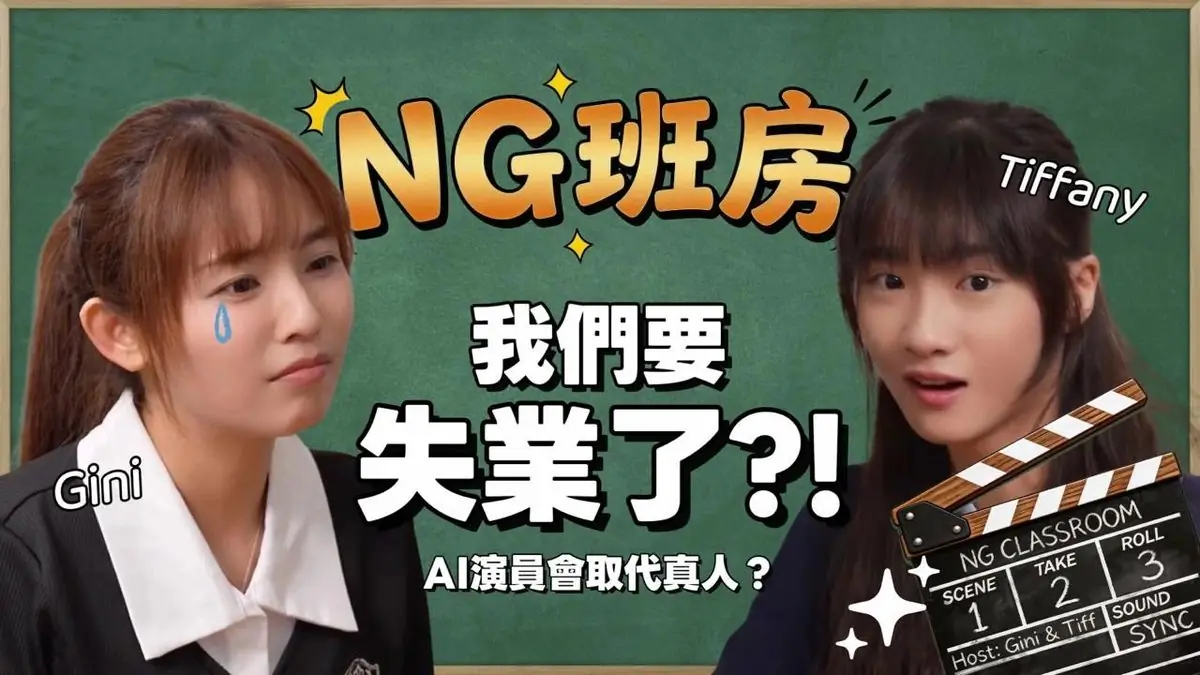
For example, in Singapore, locally based TV artists—Macau-born Gini Chang (曾曉晴) and Hong Kong-born Tiffany Ho (何睿烔)—shared candidly on their YouTube program “NG Classroom”/NG班房 about the real and pressing threats posed by AI. Despite this, they remain committed to developing their acting careers. Chang emphasized continuous improvement in acting skills, hoping to “move opportunities through effort,” while Ho agreed on the importance of cultivating personal charm and individuality to stay competitive—essentially racing alongside AI rather than against it.
The production of visual content is shifting from being “capital-intensive” to “technology-intensive.” As barriers to entry fall, competition will intensify and value will be redistributed. For actors, the real challenge is not simply whether AI will replace humans—but when “anyone can generate images,” why audiences would still choose you.
Talk to us to solve your digital challenges.
#AI #Aartificial intelligence #AI #AgenticAI #AIWorkflow #Tech #FutureOfWork #CreativeIndustry #DigitalTransformation #FilmIndustry #Actors #actress #deepfake #Content #TechDisruption #MediaInnovation