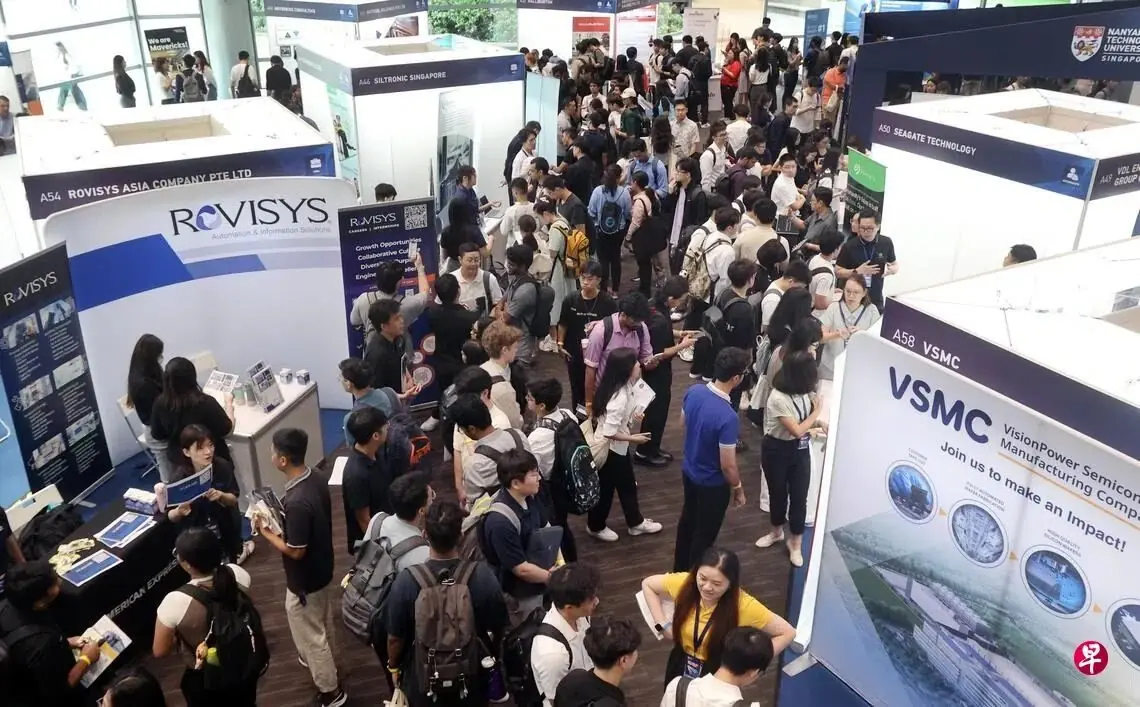
Media: Lianhe Zaobao
In 2023, amidst the global economic winter, the tech sector, especially, bore the brunt. With the proliferation of AI, layoffs in the tech industry became more frequent in 2024. Major tech companies like Google, Twitch, and Discord recently announced team reductions. However, this wave of layoffs differs significantly from that of 2023. The latest round of layoffs is primarily due to companies pursuing higher efficiency, making room for AI growth. Although AI seems to have taken away jobs from tech workers, job roles that involve operating AI skills will become the next hot demand. The ever-changing nature of the tech industry dictates that layoffs should be seen as a rejuvenation, where intensive learning, adaptation, and elimination will become the "new normal."
In the first two weeks of January 2024, companies like Google, Amazon, Duolingo, and Twitch announced layoffs. Data from the online "layoff tracker" Layoffs.fyi shows that as of January 15, over 7,500 employees have been laid off by 48 tech companies globally this year.
During the layoffs in 2022 and 2023, many tech companies found that their large-scale investments during the Covid pandemic did not yield the expected success as the world reopened from Covid lockdowns. Excessive hiring during the pandemic, coupled with economic downturns and the impact of the Ukraine-Russia war, forced many companies to reduce their workforce budgets to cope with lower revenues.
However, in 2024, many tech companies reported healthy profits. So, why are there still massive layoffs in the tech industry? The current wave of layoffs is more related to an obsession with efficiency and the interaction with artificial intelligence (AI). Meta founder Mark Zuckerberg confirmed this by stating that the company will undergo restructuring to "improve organizational efficiency, enhance developer productivity and tools, and strengthen distributed work." Similarly, Duolingo mentioned that they laid off some contract workers at the end of last year to allocate more resources to AI-related content generation and sharing methods. This type of ongoing internal restructuring in companies coincides with the widespread adoption of AI. However, the integration of AI is not flawless. Issues related to AI collaboration, regulation, authenticity testing, protection of intellectual property, and security controls have become industry priorities.
So, which tech roles highly related to AI or IT-related job titles will be more in demand in Singapore? Among the fastest-growing technical roles in Singapore are:
- Data Science Experts (responsible for machine learning, data science, natural language processing, collecting and analyzing large amounts of data, and then transforming it into useful insights for business decisions)
- Quantitative Developers (developing and implementing quantitative models in financial companies such as investment banks, with necessary skills including algorithmic trading, machine learning, and quantitative analysis)
- Site Reliability Engineers (creating and implementing automated software tools to maximize system reliability and efficiency)
Additionally, jobs related to security controls will also be in high demand, including:
- Information Security Operations Analysts/Infrastructure Engineers (monitoring system activities, identifying and responding to information security threats, remediating system security flaws, protecting the security of the company's IT infrastructure, and reducing the impact of hacker attacks)
- Backend Developers/Cloud Engineers (coding and building program servers and database functions that make up the skeleton of websites or applications, or managing the company's cloud-based systems, responsible for setup, ensuring stability, implementing updates, and customizing their functions to meet the needs of end-users).
In general, the aforementioned roles are relatively easy for many laid-off tech professionals to transition to, especially those in technical positions such as software engineers, IT services and IT consultants, systems engineers, DevOps engineers, and web developers, as they are more likely to grasp relevant technologies and synchronize with the upgrading of tech companies.
The conclusion that these roles are increasingly in demand and easier to transition to is supported by research conducted by LinkedIn. They examined millions of jobs started by LinkedIn members from January 1, 2019, to July 31, 2023, to calculate the growth rate of each job title. The results showed that among the 20 hottest high-growth jobs in Singapore, seven are related to AI and infrastructure. LinkedIn data further shows that Singapore is the fastest-growing market for AI talent in the Asia-Pacific region. Between 2016 and 2022, it grew by 565%, surpassing other countries such as Australia, India, and Japan. In 2022, Singapore's hiring growth rate for talent in the field of artificial intelligence was 14% faster than the overall hiring growth rate.
It is evident that despite the ongoing wave of layoffs in the tech industry, there are still opportunities in Singapore's tech sector. As long as one can "coexist with AI," they can adapt to the new normal of "sustainable layoffs" in the tech industry. As for workers in fields like writing and customer service, it may be challenging to transition immediately after being laid off. Hence, it is advisable to prepare early and explore government funding initiatives to equip oneself adequately.
Talk to us to solve your digital challenges.
#AI #ChatGPT #Layoff #TechLayoff #Google #Amazon #Duolingo #Twitch #LinkedIn #Meta #Singapore #recruit #recruitment #job #jobhunting #jobsearching #artificialintelligence #IT #tech #techindustry