Media: Lianhe Zaobao
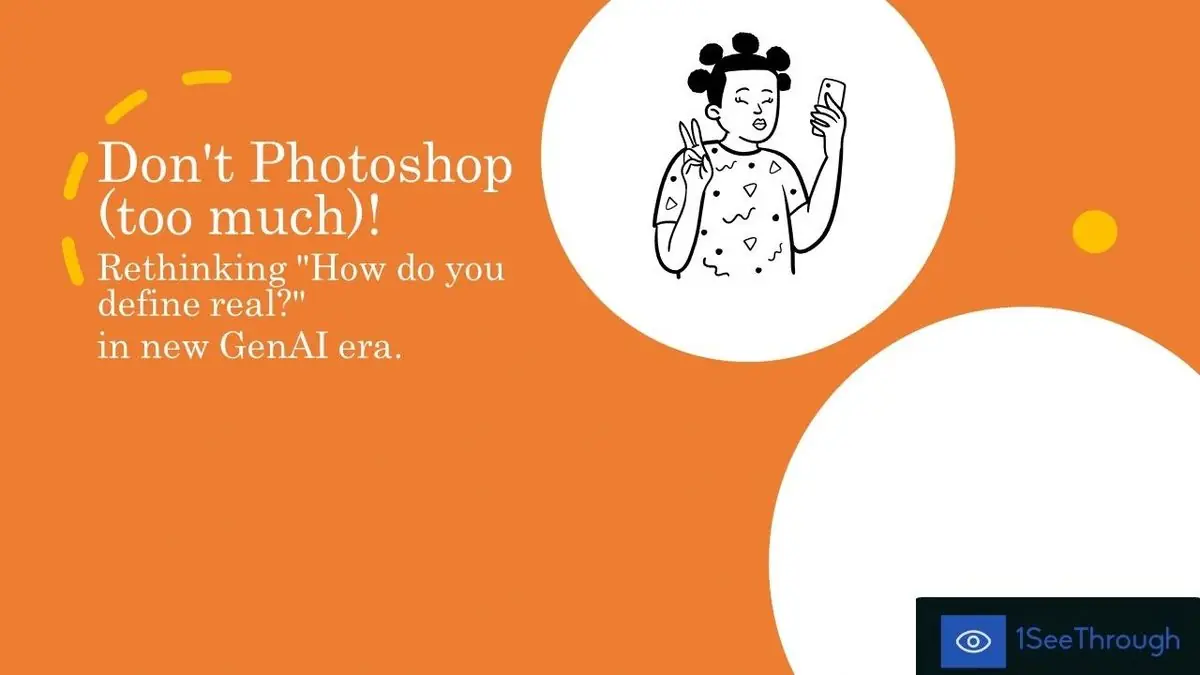
"I recognize you without makeup, that's called 'makeup'; I don't recognize you without makeup, that's called 'disguise'.", according to Dayo Wong. In the age of the internet, many people, regardless of age or whether they are models, edit their selfies to perfection, making it difficult to recognize them. Each person invests time and effort to achieve a standardized aesthetic: sharp features, high nose, big eyes, small mouth. This has become a contemporary form of disguise, and the excessive pursuit of perfection often leads to a significant disparity when encountering the real person, overshadowing individual uniqueness after conforming to mainstream aesthetic standards.
In recent months, AI-generated images have flooded the internet. Through methods like Midjourney and Controlnet, highly realistic portraits resembling perfect models have emerged. This blurs the line between AI-generated disguises and human photos manipulated to the point of falsehood. There's a circulating "AI Human Recognition Test," where most people can only correctly identify half of the images between "real human photos" and "artificial intelligence" pictures.
While the act of human photo editing may seem like a quest for perfect self-expression, it brings about more negative impacts. Firstly, excessive photo editing leads to a loss of authenticity, creating a sense of disguised beauty that makes interpersonal communication fragile and unreal. Secondly, photo editing imposes unnecessary psychological pressure, causing individuals to feel anxious, dissatisfied, confused, and uncertain about their appearance. In the long run, this psychological burden can harm one's mental and physical well-being.
In the discourse around the widespread application of artificial intelligence, concerns arise about AI replacing jobs, prompting individuals to reflect on the meaning of their existence. Whether it's makeup photos or selfies, people can't resist employing various strategies to enhance their image, sometimes resulting in a loss of authenticity. In such circumstances, one cannot help but contemplate: Should humans continue seeking self-perfection in public, or should they rediscover their true selves?
Certainly, photo editing is just the most apparent example. Many individuals, for the sake of shaping a perfect image, exaggerate achievements on LinkedIn, portray themselves as exemplary on Facebook, and deliberately flaunt wealth in interactions with colleagues and friends. In this age of illusion and fleeting internet trends, humans should seek themselves, appreciate their unique qualities, rather than blindly pursue surface perfection. Although AI-generated images are incredibly lifelike, they lack human warmth and personality. In comparison, the natural beauty of humans is more captivating.
As of now, with tools like Midjourney for AI drawing, ChatGPT for language interactions, and D-ID for video technology, it's already possible to rapidly create videos that are 80-90% indistinguishable from real people speaking. In this era of rapidly advancing technology, what was once only seen in paintings, films, or computer games generated by artificial intelligence is gradually becoming a reality. The authenticity of these creations makes it increasingly challenging for humans to distinguish between reality and falsehood. In this era where truth and falsehood are hard to discern, individuals are still pursuing a uniform sense of beauty. The choice between self-indulgence and rediscovering the true self may be upon us.
Talk to us to solve your digital challenges.
#AI #Midjourney #Photoshop #chatgpt