Media: 联合早报 聯合早報 Lianhe Zaobao
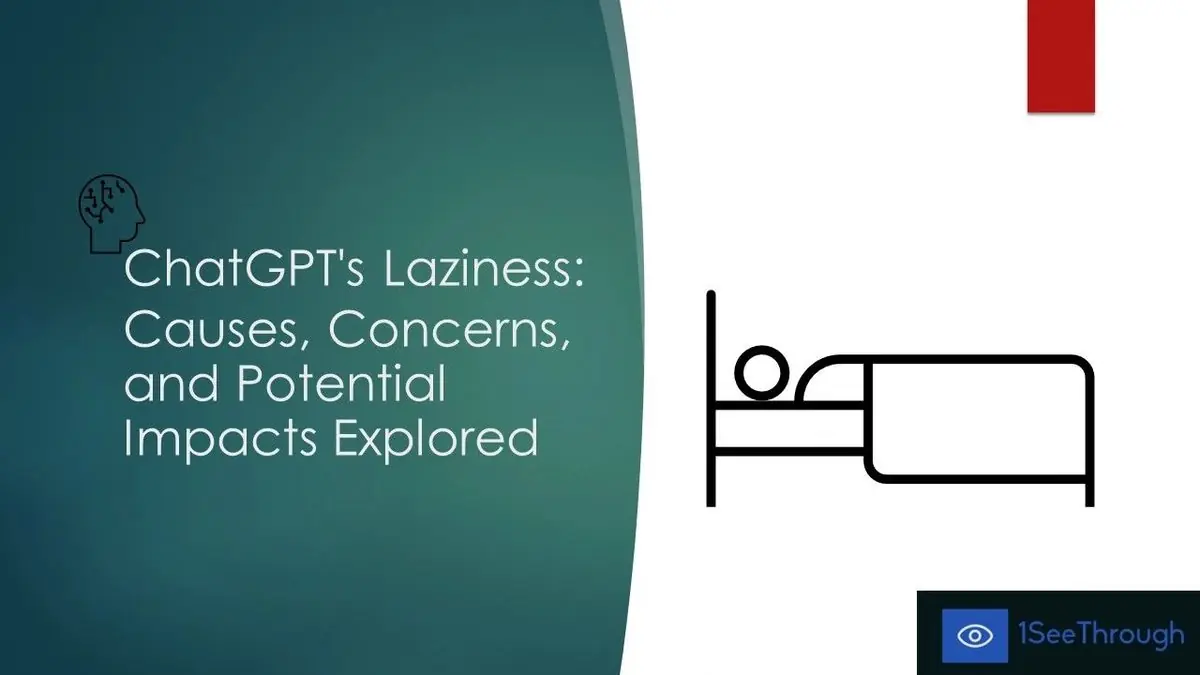
ChatGPT, as a model for learning human language, has undergone unexpected developments since its release in November 2022. Instead of revolutionary advancements benefiting humanity, it seems to have adopted a human habit: lying flat (laziness).
Recently, users have noticed ChatGPT's suspected "laziness." Since November, it has exhibited three major faults:
1) slower response times, both in digesting commands and providing answers;
2) shorter responses, avoiding complex questions and abandoning form-filling instructions halfway; and
3) occasionally ignoring commands, refusing to provide complete answers or execute routine tasks like file conversions or reading links.
Various speculations surround the cause. Some jokingly attribute it to ChatGPT learning human habits, needing encouragement to talk, resting after prolonged work, or experiencing end-of-year holiday mood. Others entertain conspiracy theories, suggesting internal strife within OpenAI, ChatGPT's development company, as the trigger. Some even propose that ChatGPT is mimicking hibernation behavior, directly opting to "lie flat" (laziness).
However, the troubling aspect is OpenAI's assertion that there have been no modifications to the model since November 11th. They acknowledge user reports of "ChatGPT getting lazy" and assure efforts to resolve the issue. In other words, ChatGPT's natural evolution in the past two to three weeks hasn't been influenced artificially, yet its creators are unable to identify the cause and debug the situation.
Since its release, OpenAI positioned ChatGPT to revolutionize AI by integrating various technologies to enhance efficiency in tasks like text work, audio-visual production, and computation. Facing challenges from rivals like Google's Bard, OpenAI continuously improved the model's performance, contextual understanding, and response coherence. It expanded its applications, offering information on various topics, assisting users in problem-solving, creative writing, or data collection. Incorporating user feedback helped address potential flaws and enhance user experience. Addressing multilingual demands, whether in individual language performances or mixed-language text processing, further improved accuracy and effectiveness by broadening data inputs to real-time, up-to-date web data.
During the first quarter of the year, there was eagerness globally to test human language models like ChatGPT. Many anticipated AI developments would disrupt or transform numerous industries, potentially leading to job cuts, impacting social interactions, lowering information credibility, improving efficiency, standardizing language usage, and increasing privacy and information security risks. Unfortunately, after twelve months, the anticipated revolutionary changes failed to materialize on a large scale. While some industries have seen gradual changes leading to job cuts and efficiency improvements, the overall impact has been less dramatic than expected.
However, amidst this year's progress, an unexpected occurrence has been the laziness observed in the AI industry. If left unresolved in the short term, this could lead to:
1) More users switching to alternative services like Bard or xAI.
2) Existing applications and interfaces built on GPT-4 needing rewriting to prevent mishaps, causing engineers to work tirelessly through the year-end.
3) Increased skepticism and reservation towards technological advancements among humans. While caution regarding safety and trustworthiness is beneficial, it could also slow down technological progress.
4) The risk of ChatGPT and similar models spiraling out of control, with unpredictable consequences. If humans fail to control AI and it causes harm, there may be anticipation for another AI to emerge as a savior to counteract the damage.
Talk to us to solve your digital challenges.
#ChatGPT #Bard #OpenAI #GPT4 #GenAI #Google #artificialintelligence #laziness #performance