Media: 联合早报 聯合早報 Lianhe Zaobao
From GenAI conversations to AI Agents, artificial intelligence is finally beginning to “get things done.” What makes next-generation AI Agent platforms such as OpenClaw, Hermes Agent, and Claude feel remarkable is not simply their ability to automate workflows, but their growing ability to manage context, track states, maintain memory, call tools, and even continuously refine themselves.
AI is beginning to evolve from a chatbot into a system. And competition in AI is gradually shifting from model-versus-model toward architecture-versus-architecture.
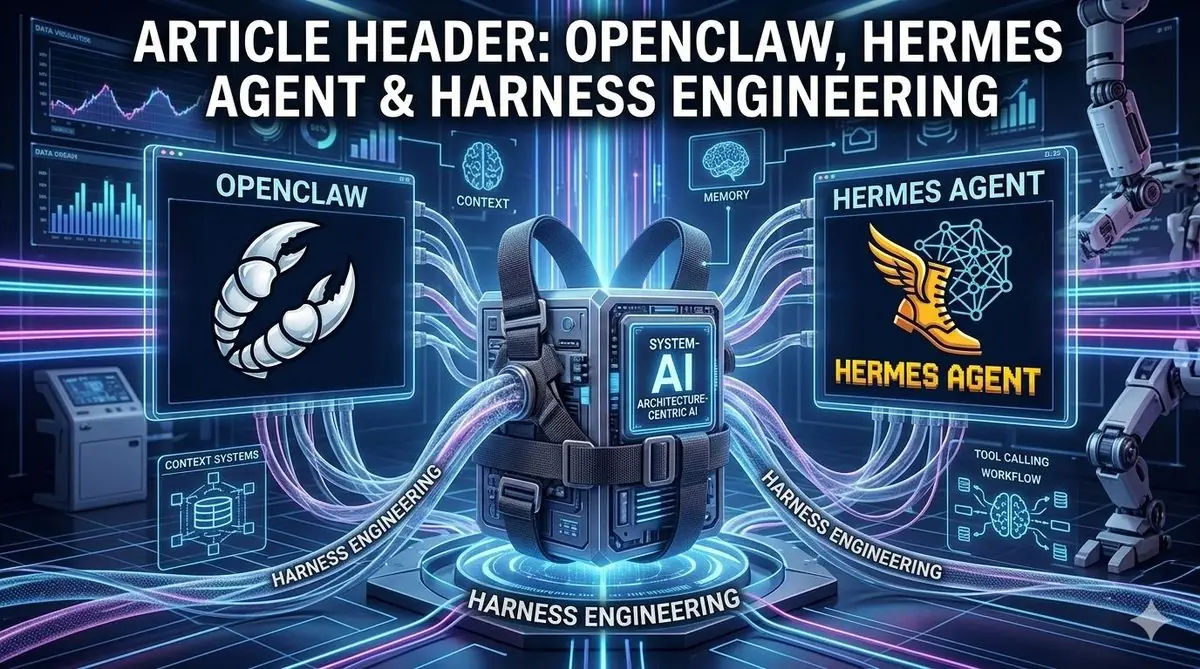
Two particularly interesting directions to observe are the differences between OpenClaw and Hermes Agent.
OpenClaw represents more of a “breadth-oriented” AI architecture. Its core design enables agents to connect with a wider range of external tools, workflows, and skills. The focus is on expanding capability: agents can download skills, organize capability libraries, and even restructure their own tool systems. The philosophy behind this design is that AI is no longer just a standalone brain, but an expandable execution system — similar to a conductor continuously adding musicians, expanding the orchestra, and performing different symphonies.
On the other hand, Hermes Agent focuses more on the system’s ability to self-adjust. The emphasis is not just on “doing many things,” but on “getting better over time.” The system modifies its behavior and strategies based on previous results, gradually developing the characteristics of a self-improving or self-upgrading system. It is somewhat like a music synthesizer combined with a sampler — constantly learning, updating, improving, and becoming a more powerful instrument and music imitation system.
OpenClaw focuses on making AI broader in capability; Hermes focuses on making AI better at growth. Yet both directions ultimately point toward the same reality: AI is evolving from being model-centric into being system-architecture-centric.
This is why one of the hottest AI skills over the past six months has been Harness Engineering.
Some see it as the next AI capability worth taking seriously after Prompt Engineering and Vibe Coding. The word “harness” originally refers to horse gear or safety equipment — something used to channel and control power. It is not the power itself, but the structure that stabilizes, guides, protects, and amplifies that power.
Large language models themselves are like brains with enormous potential, but capability alone does not make them truly usable. You still need an architecture that can guide, constrain, monitor, protect, and scale those capabilities so they can operate reliably in the real world. That architecture is the Harness.
Put simply: the model provides productivity, while the Harness determines usability.
A strong AI Agent operating system is usually built on a complete context system, memory mechanism, tool calling, workflow orchestration, permission layers, retry mechanisms, evaluation pipelines, checkpoints, logging systems, and state management.
For example, when you ask it to code, it does not simply output code — it reads files, modifies them, runs tests, checks for errors, and continuously debugs and improves. When you ask it to conduct research, it does not merely provide a final answer — it searches, organizes sources, creates notes, and gradually develops meaningful outputs while preserving progress, checkpoints, and memory throughout the process.
That is the core of Harness Engineering.
If Prompt Engineering focuses on “how to ask,” and Context Engineering focuses on “what the model sees,” then Harness Engineering focuses on how the entire AI system operates.
The reason Harness Engineering is becoming so important is that companies and individuals building automated workflows and AI-powered products are now demanding systems that can complete work in a stable, controllable, and observable way. This pushes AI development into a much deeper technical layer.
In the future, the value developers and companies derive from AI transformation will no longer come merely from knowing how to use AI tools, but from whether they can transform models into sustainable, operational systems.
If you — or students you know — are considering participating in the AI transformation era, this will likely become one of the most important skills to invest time and effort into learning over the coming years.
Talk to us to solve your digital challenges.
#ArtificialIntelligence #AI #AIAgents #HarnessEngineering #AIArchitecture #GenerativeAI #OpenClaw #HermesAgent #FutureOfWork #Automation #AITransformation